

DAAD Scholarship Germany: Guide for Indian Students & Working Professionals





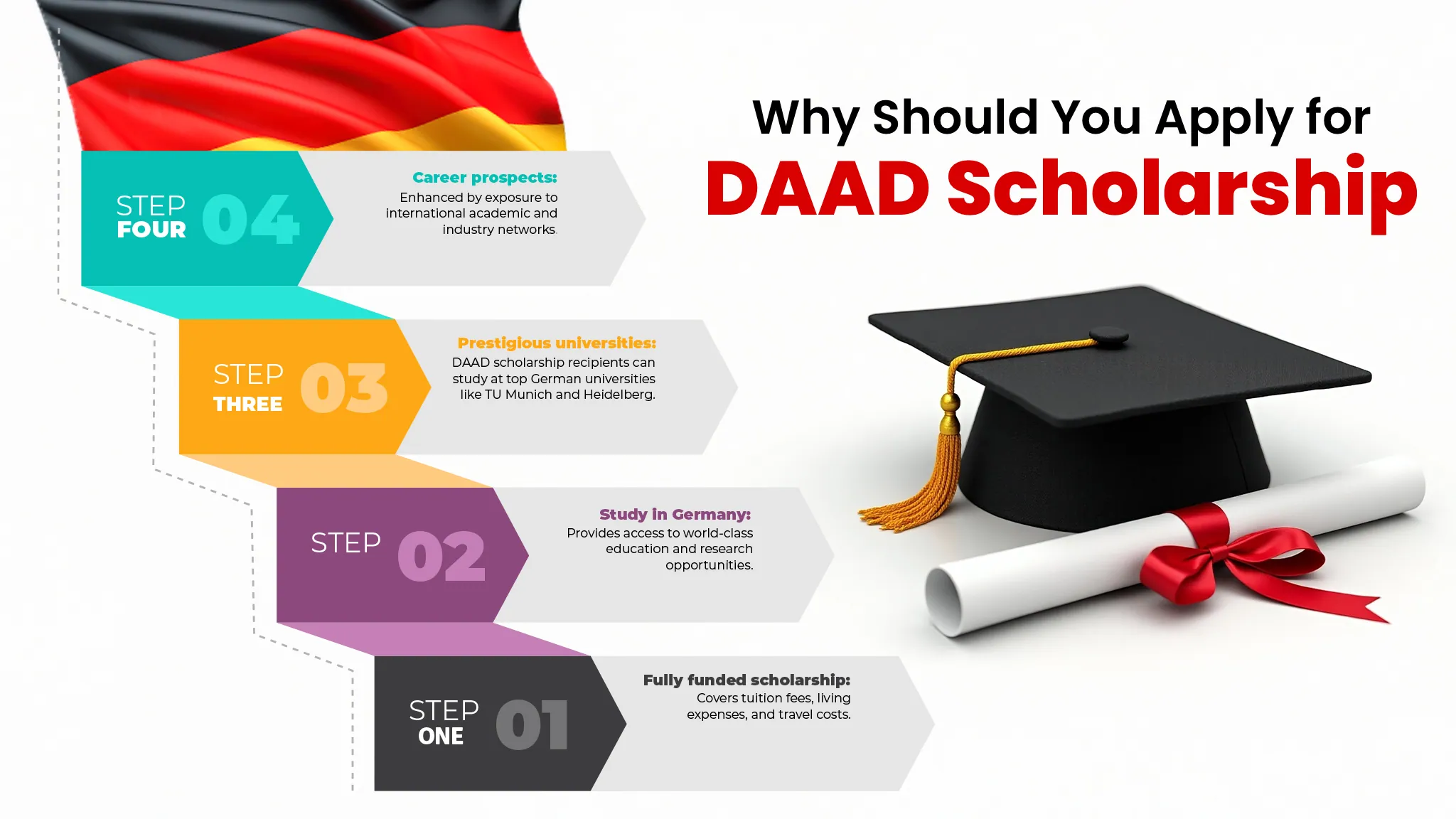
The DAAD Scholarship (Deutscher Akademischer Austauschdienst), or German Academic Exchange Service, is one of the most respected scholarship programmes in the world. It supports talented students and young professionals who aim to pursue higher studies, research, or professional development in Germany. The scholarship covers tuition fees, living expenses, health insurance, and travel costs, making education in Germany accessible to deserving candidates.
For applicants from Kerala, this is a valuable opportunity to study abroad without major financial pressure while gaining exposure to Europe’s leading universities and industries. Germany, known for its strong academic standards and affordable education, attracts thousands of Indian scholars each year. The DAAD Scholarship thereby provides an excellent route for students to experience global learning and long-term career advancement.
Types of DAAD Scholarships for Indian Students
The DAAD offers a variety of scholarships for Indian students, supporting academic study, research, and professional development across diverse disciplines and levels of education in Germany as follows:
| Scholarship Name | Target Group | Monthly Stipend |
|---|---|---|
| EPOS (Development-Related Postgraduate Courses) | Master’s or PhD degree holders with 2+ years of work experience | ~ €992 (Master’s) / ~ €1,300 (PhD) |
| Helmut-Schmidt Programme (Master’s in Public Policy) | Graduates in law, political science, economics, and administration | €934 |
| WISE (Working Internships in Science and Engineering) | Indian undergraduates (B.Tech/BE) from select institutions | €861 |
| Study Scholarships for Graduates (All Disciplines) | Indian graduates of all disciplines | €934 |
| Research Grants – One-Year Grants | PhD candidates | €1,300 |
| Research Grants – Short-Term | PhD students/researchers | €1,300 |
| KOSPIE (For IIT & NIT students) | UG/PG engineering students from Indian technical institutes | €861 |
| Bilateral Exchange of Academics | Indian researchers & faculty | €2,000+ |
| Re-invitation Programme for Former DAAD Scholarship Holders | Alumni of DAAD programmes | €2,000+ |
| STIBET Scholarships | International students already studying in Germany | €500 – €700 |
1. Development-Related Postgraduate Courses (EPOS)
This program enables graduates from developing and newly industrialised countries to complete a Master’s degree (and sometimes a PhD) in fields relevant to development (e.g., environmental engineering, public policy, economics) in Germany.
Key Benefits:
- Monthly stipend: around €992 (Master’s) / €1,300 (PhD)
- Full tuition coverage
- Health, accident, and personal liability insurance
- Travel allowance
- Possible rent and family allowances
2. Helmut-Schmidt-Programme (Master’s in Public Policy & Good Governance)
Designed for graduates from developing/emerging countries who aim to undertake a Master’s in public policy, governance, law, economics, or similar disciplines at German universities.
Key Benefits:
- Monthly stipend of about €934
- Full tuition fee waiver
- Health insurance and travel support
- German language course before studies in Germany
- Rent and family allowances for eligible students
- Opportunity to study at top German universities with a focus on democracy and good governance
3. WISE (Working Internships in Science & Engineering)
This scheme offers research internship opportunities in Germany for undergraduate students in science and engineering from partner countries.
Key Benefits:
- Monthly allowance during the internship period.
- Travel subsidy for the trip to Germany.
- Insurance cover for the internship stay.
- Valuable research exposure in German universities or institutes.
4. Study Scholarships for Graduates (All Disciplines)
This programme allows graduates from any academic discipline to pursue postgraduate study (Master’s) in Germany, either a full programme or a study year as part of their degree.
Key Benefits:
- Monthly stipend (~€ 934 or more) for the funding period.
- Inclusion of health, accident, and personal liability insurance.
- Travel allowance and possibly additional benefits (rent/family support) in some cases.
- Flexibility in subject area across disciplines.
5. Research Grants – One-Year Grants
The programme supports doctoral candidates (and in exceptional cases graduates) to conduct a research project in Germany lasting up to about a year.
Key Benefits:
- Monthly stipend (varies by qualification) plus allowances for health, accident, liability insurance, travel, and research.
- Opportunity to carry out substantial research or join a German institution as part of your doctoral path.
- Access to German research infrastructure and networks.
6. Research Grants – Short-Term
This funding is targeted at doctoral candidates or academics for shorter research stays (e.g., 1-6 months) at a German institution.
Key Benefits:
- Monthly grant (approx. € 735 in some cases) for the funding period.
- Support for insurance cover (health/accident) and sometimes travel costs.
- Good option for shorter-term project phases, collaborations, or field work in Germany.
7. KOSPIE (For IIT & NIT students)
A programme for engineering students from Indian institutions (such as IITs/NITs) to combine study and practical project work at German universities.
Key Benefits:
- Monthly stipend during the stay in Germany.
- German language course before the project period.
- Travel allowance and insurance coverage.
- Direct exposure to the German academic and industrial research context.
8. Bilateral Exchange of Academics
This scheme facilitates the exchange of academics (lecturers, researchers) between Germany and partner countries under bilateral agreements.
Key Benefits:
- Support for teaching or research stays in Germany.
- Networking and collaboration with German universities.
- Enhances academic mobility and international partnerships.
9. Re-invitation Programme for Former DAAD Scholarship Holders
This program enables beneficiaries of previous DAAD scholarships to return to Germany for further research, project work, or academic collaboration.
Key Benefits:
- Funding for stays aimed at leveraging previous engagements in Germany.
- Opportunity to deepen research links or extend professional networks in Germany.
- Supports alumni of DAAD in their ongoing careers.
10. STIBET Scholarships
The “Stipendium und Betreuungsprogramm” (STIBET) is a scholarship + mentoring programme for international students and doctoral candidates enrolled at German institutions.
Key Benefits:
- Monthly stipend (varies, e.g., minimum ~€250) for a limited period (e.g., six months) in some cases.
- Support for completion of studies (graduation grants) for students in the final phase.
- Accompanying mentoring or support programmes to help integration and academic success.
DAAD Scholarship Eligibility Criteria
The eligibility criteria for the DAAD Scholarship Germany emphasize academic excellence, professional experience, and language proficiency. While requirements differ across programmes, Indian students generally need to meet the following standards.
| Criteria | Details |
|---|---|
| Nationality | Must be an Indian citizen |
| Academic Qualification | Minimum 4-year bachelor’s degree from a recognized university |
| Academic Performance | Strong record (typically 85% or above / CGPA 8.5+) |
| Work Experience | Minimum 2 years of relevant professional experience (mandatory for EPOS) |
| Language Proficiency | IELTS 6.0+, TOEFL iBT 80+, or certified German language proficiency |
Programme-Specific Notes
- EPOS: Requires 2+ years of professional experience after graduation.
- Helmut-Schmidt: Prior exposure to public administration, law, or economics preferred.
- WISE: Open to students enrolled in IITs, NITs, or IISc.
- PhD & Research Grants: Require a detailed research proposal and confirmation from a German supervisor.
Note: Applicants must not have lived in Germany for more than 15 months at the time of applying.
DAAD Scholarship Germany Requirements
Applying for the DAAD Scholarship in Germany requires careful preparation and attention to detail. The scholarship committee evaluates academic merit, professional achievements, and clarity of purpose. Before submitting your application, ensure that you meet all essential academic and documentation requirements.
| Requirement | Description |
|---|---|
| DAAD Application Form | Fill out the official DAAD online form through the DAAD portal. Ensure accuracy and consistency across all entries. |
| Academic Qualification | A recognized Bachelor’s or Master’s degree (minimum 4 years), depending on the chosen programme. |
| Transcripts & Certificates | Certified copies of all academic records, including marksheets and degree certificates. |
| Curriculum Vitae (CV/Resume) | Submit an updated Europass-format CV, including academic history, professional experience, internships, and achievements. |
| Language Proficiency Proof | English proficiency through IELTS (min 6.0) or TOEFL iBT (min 80); for German-taught programmes, B2 or C1 level in TestDaF or DSH. |
| Letter of Motivation | A 1–3 page statement explaining academic interests, career goals, and reasons for applying to DAAD. |
| Letters of Recommendation | One or two reference letters from professors or employers highlighting academic potential or professional strengths. |
| Proof of Work Experience | Required for programmes like EPOS and Helmut-Schmidt, showing at least two years of relevant professional experience. |
| Research Proposal (if applicable) | For doctoral and research grants, include a detailed research outline and confirmation from a German supervisor. |
| Passport Copy | Valid passport (with at least 6 months remaining before expiration). |
Tips for Kerala Applicants
Applicants from Kerala should pay extra attention to documentation and verification processes:
- Translation: All documents in Malayalam or regional languages must be translated into English or German by an authorized translator.
- Attestation: Transcripts and degree certificates must be attested by the issuing university or an approved authority.
- University Delays: Some Kerala universities have longer verification timelines, so start the process at least 3 to 4 months before the application deadline.
- Digital Readiness: Keep both PDF and hard copies ready, as DAAD may request either depending on the programme.
When to Apply for the DAAD Scholarship From India
Planning your DAAD Scholarship application timeline is just as important as meeting eligibility or document requirements. Since different DAAD programmes have varying deadlines, starting early ensures you have enough time to prepare and submit a complete application.
Application Timeline
- Most DAAD scholarships open between August and November for the next academic year (starting in September/October).
- EPOS & Master’s programmes: Apply between October and December.
- Research & PhD grants: Often accept applications until March.
- WISE internships: Typically open in October-November for summer placements.
- Always confirm the exact date on the DAAD Scholarship Database or DAAD India
Processing Time
- The DAAD scholarship assessment takes about 4-6 months after submission.
- Results are generally announced between March and May.
- Selected candidates complete visa procedures and pre-departure formalities between May and August.
Preparation Plan for the Applicants
- 6-8 months before deadline: Research universities and confirm eligibility.
- 4-6 months before deadline: Begin preparing transcripts, certificates, and test scores (IELTS, TOEFL, TestDaF).
- 3 months before the deadline: Draft your motivation letter and collect recommendation letters.
- 1-2 months before deadline: Complete the DAAD online application and review documents carefully before submission.
How to Apply for a DAAD Scholarship in Germany (Step-by-Step Guide)
Applying for the DAAD Scholarship Germany is a structured process that involves careful preparation and timely submission. Each step plays an important role in ensuring your application meets all academic and documentation standards. Here are the steps you need to follow:
| Step 1: Visit the DAAD Scholarship Database | Go to the DAAD Scholarship Database to explore available programmes and funding options. |
| Step 2: Filter Scholarships | Use filters for academic level (Master’s/PhD), field of study, and nationality (India) to view relevant scholarships. |
| Step 3: Review Programme Requirements | Read all eligibility criteria, funding details, and deadlines carefully before starting your application. |
| Step 4: Register on the DAAD Portal | Create an account on the official DAAD application portal to access and fill out the online form. |
| Step 5: Upload Required Documents | Attach all documents—transcripts, certificates, motivation letter, CV, and language test results in PDF format. |
| Step 6: Submit Before Deadline | Submit your completed application between September and December (depending on the programme). Apply a few days early to avoid technical delays. |
| Step 7: Attend Interviews (if applicable) | Some DAAD programmes may require an online or in-person interview for shortlisted candidates. |
| Step 8: Await Results and Visa Instructions | Results are usually announced between March and May, followed by guidance on visa and pre-departure formalities. |
Conclusion
The DAAD Scholarship Germany provides Indian students and professionals with a valuable opportunity to study, research, and grow at top universities with full financial support. It enhances global academic exposure and career prospects. Begin your preparation early, organize your documents, and apply with confidence. Contact today to begin your DAAD scholarship journey!
FAQs
1. Is DAAD scholarship fully funded?
Yes, the DAAD scholarship is fully funded and covers tuition fees, monthly living expenses, travel costs, and health insurance. It is designed to support international students throughout their study or research period in Germany.
2. Is DAAD scholarship available for Indian students?
Yes, Indian students are eligible to apply for various DAAD scholarships offered for postgraduate, doctoral, and research programmes in Germany. The eligibility and application requirements may vary depending on the specific programme.
3. How does DAAD scholarship work?
The DAAD provides financial and academic support to international students who wish to study or research at German universities. Applicants are selected based on academic merit, motivation, and relevance of their study or research plans.
4. Who is eligible for DAAD scholarship?
Eligibility depends on the programme, but applicants generally must hold a bachelor’s degree and have a strong academic record. Work experience and clear study or research goals related to development may also be required for certain programmes.
5. Is IELTS compulsory for DAAD?
IELTS is not always mandatory; however, proof of English or German language proficiency is required. The accepted tests and minimum scores vary by university and programme.
6. Does DAAD have an age limit?
There is no strict age limit, but most programmes prefer applicants who have completed their last degree within the past six years. Some specific scholarships may have programme-based age preferences.
7. Can I stay in Germany after a DAAD scholarship?
DAAD scholars can stay in Germany after completing their studies if they find suitable employment or pursue further education. They may apply for a residence permit to seek work or continue research.
