
German Schengen Visa Guide for International Students





Germany attracts many Indian students and job seekers for quality and affordable education, strong career prospects, and long-term stability. From university interviews and entrance exams to short academic programmes, the journey often begins with a brief visit. In such cases, the German Schengen Visa becomes applicable, as it allows short-term entry into Germany before making long-term commitments.
Many applicants feel confused about visa rules, timelines, and documentation, which can lead to delays or rejections. This guide simplifies the application for a Schengen visa to Germany and explains how international students from Kerala can apply with clarity and confidence. With proper preparation, short-term travel to Germany becomes smooth and well planned.
What Is a Schengen Visa?
A Schengen Visa, the short-stay travel permit, is issued for temporary visits, allowing the visitors to enter Germany and move freely across other Schengen countries without internal border checks. This Schengen travel visa allows a maximum stay of 90 days within a 180-day period. Students and job seekers often use this visa for university interviews, entrance exams, short academic programmes, business meetings, or family visits.
Since Germany is part of the Schengen Area, a visa issued by German authorities allows entry into multiple European countries for the approved period of stay.
Types of Schengen Visa
Schengen visas are classified into different types depending on how long you plan to stay and why you are travelling, as follows:
| Visa Type | Description |
|---|---|
| Type A – Airport Transit | Stay limited to the airport international transit area |
| Type B – Transit | Transit through Schengen countries for up to five days |
| Type C – Short Stay | Short visits up to 90 days for travel, study visits, or business |
| Type D – National Visa | Long-term stay for study, work, or residence |
Short academic visits usually require a Type C visa, while full-time studies need a Type D visa.
Schengen Visa Eligibility: Who Needs to Apply?
A Schengen Visa is mandatory for travellers who are not citizens of European Union countries. It is a must for Indian passport holders to obtain a Schengen Visa before travelling to Germany or any other Schengen country, and applications must be submitted from within India.
International students and job seekers from Kerala need a Schengen Visa for:
- Short-term study visits
- University interviews
- Entrance examinations
- Academic training programmes
- International conferences
This visa also applies to brief professional or educational travel connected to future study or career plans in Germany.
Certain categories are exempt, including holders of valid residence permits issued by Schengen countries, diplomats with special passports, and selected official passport holders. However, most students and job seekers from India fall under the visa-required category.
Why do Students & Job Seekers apply for a Schengen Visa for Germany?
Students apply for a Schengen Visa to Germany for short academic visits linked to their study plans. It includes travelling for university interviews, entrance exams, orientation programmes, and short-term courses. These visits help students understand the academic environment, campus facilities, and course structure before confirming long-term study decisions. It also gives them a clear idea of life in Germany and helps them prepare better for future academic commitments.
For job seekers, the visa supports travel for employer interviews, skill assessments, short training programmes, and industry meetings. It is also useful for professional networking and brief business-related visits. Access to other Schengen countries during the same trip adds flexibility and broader exposure, making the German Schengen Visa a practical option for short-term educational and career-related travel.
When Should You Apply for a German Schengen Visa?
Timing plays a major role in the approval of a German Schengen Visa, especially for students and job seekers planning short-term travel. Applying within the right time frame allows enough space for document checks and appointment availability.
General guidelines:
- You have to apply at least 4 to 6 weeks before the intended travel date
- Submit the applications up to 6 months in advance
- Recommended timeline for students and job seekers:
- Apply around 8 weeks before the planned travel date
- Submit earlier during peak seasons such as summer and winter holidays
Situations that need earlier application:
- Delays in receiving university or academic documents
- Invitation letters still under process
- Limited appointment slots at VFS centres
- High volume of visa applications during busy periods
Early planning helps reduce stress and lowers the chances of last-minute delays or visa rejections.
Schengen Visa Requirements
Schengen Visa documentation must be accurate and complete to avoid delays or rejection. Each applicant must submit standard documents, along with any additional documents, depending on the purpose of travel. All documents should clearly support the reason for visiting Germany and confirm the intention to return after the approved stay. Indian citizens are not eligible for a visa on arrival in Germany and must complete the Schengen Visa application process before travel.
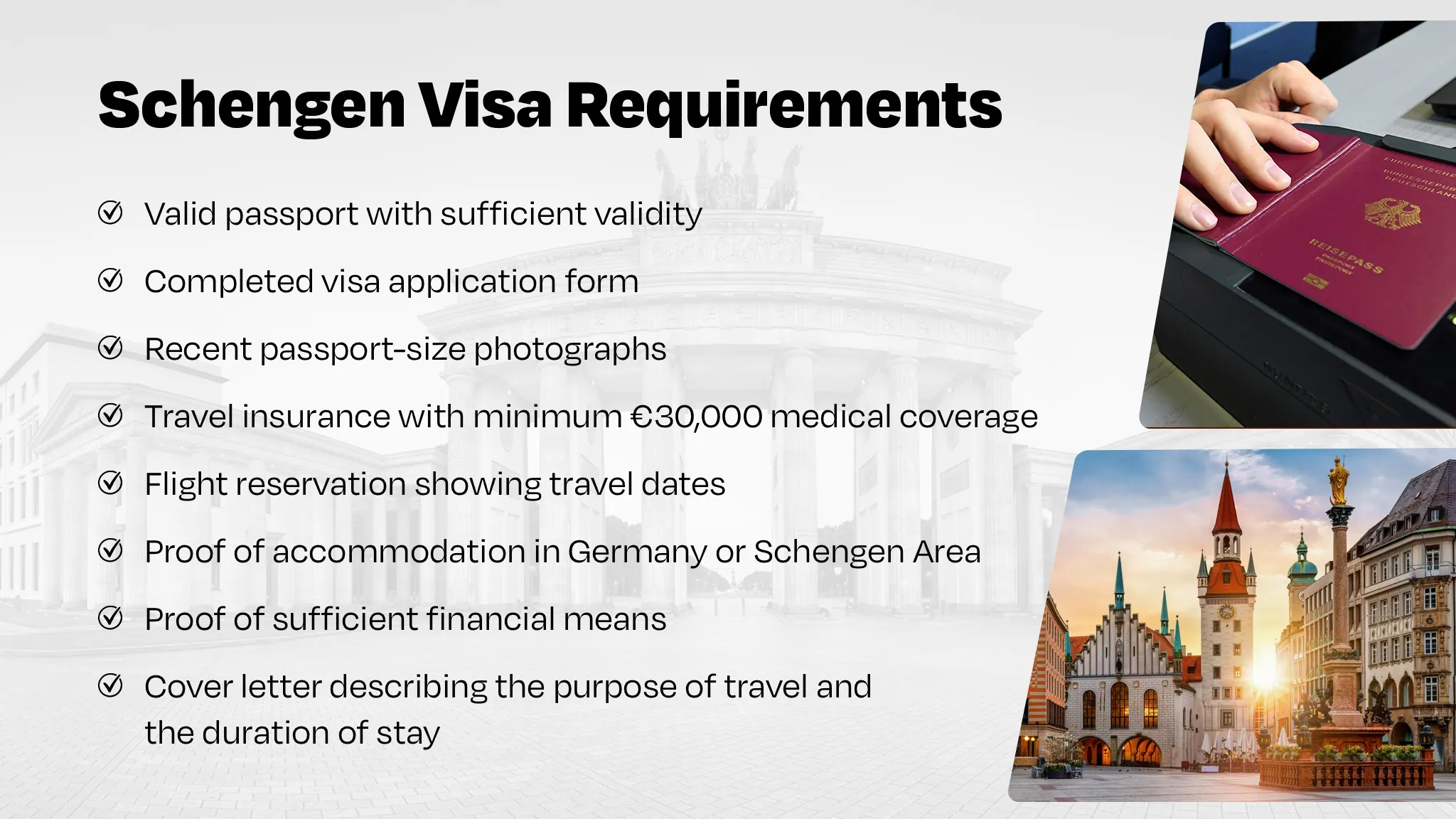
Common Documents
- Valid passport with sufficient validity
- Completed visa application form
- Recent passport-size photographs
- Travel insurance with minimum €30,000 medical coverage
- Flight reservation showing travel dates
- Proof of accommodation in Germany or Schengen Area
- Proof of sufficient financial means
- Cover letter describing the purpose of travel and the duration of stay
Additional Documents for Students
- University invitation or confirmation letter
- A bona fide certificate from the current institution
- Academic transcripts and certificates
- Proof of course registration or entrance exam details
Additional Documents for Job Seekers
- Interview call letter from the employer
- Invitation letter from a German company
- Updated CV and qualification certificates
- Proof of relevant professional experience
Visa Fee Structure
| Category | Fee (EUR) |
|---|---|
| Adults | ~€90 |
| Children (6–12 years) | €45 |
| Children below 6 | Free |
Note: Visa fees are payable in INR at VFS centres, based on the current exchange rate, with additional service charges applied separately.
How to Apply for a Schengen Visa for Germany
Applying for a German Schengen Visa involves a clear step-by-step process. Proper planning and correct documentation help reduce delays and rejections.
Step-by-Step Application Process
- Check eligibility based on travel purpose and visa category.
- Collect all required documents, including travel, financial, and academic or professional proofs.
- Complete the Schengen visa application form accurately
- Book an appointment with the German consulate or an authorised VFS Global centre
- Select Germany as the main destination while booking the appointment
- Visit the VFS centre on the scheduled date
- Biometric data collection, including fingerprints and a photograph, is mandatory for all applicants at the VFS centre.
- A short visa interview may be conducted if required by the consulate to assess travel intent and return plans.
Processing for German Schengen Visa
The usual processing time ranges from 15 to 30 calendar days from the date of submission. Processing may take longer during peak travel seasons, due to document verification, embassy workload, or additional security checks.
Common Reasons for Visa Rejection
Visa delays or rejections often result from missing or incorrect documents, an unclear travel purpose, insufficient financial proof, limited travel history, or additional verification during peak application periods.
Conclusion
Understanding the German Schengen Visa process helps students and job seekers plan short-term travel with clarity and confidence. This visa allows temporary access to Germany and other Schengen countries for academic and professional purposes. Applying early with accurate documentation reduces delays and the risk of rejection. With expert guidance from ZEIQ Consultants, students receive trusted visa support, German education counselling, and professional assistance throughout the application journey.
FAQs
1. Can Indian students apply for a German Schengen Visa from Kerala?
Yes. Applications are accepted through VFS Global centres in India.
2. Is a Schengen Visa valid for long-term study in Germany?
No. A long-term study requires a German National Visa (Type D).
3. How long can I stay in Germany with a Schengen Visa?
Up to 90 days within a 180-day period.
4. Is travel insurance mandatory?
Yes. Insurance with a minimum of €30,000 coverage is required.
5. Can I visit other countries with a German Schengen Visa?
Yes. Travel across Schengen countries is allowed during the validity.
