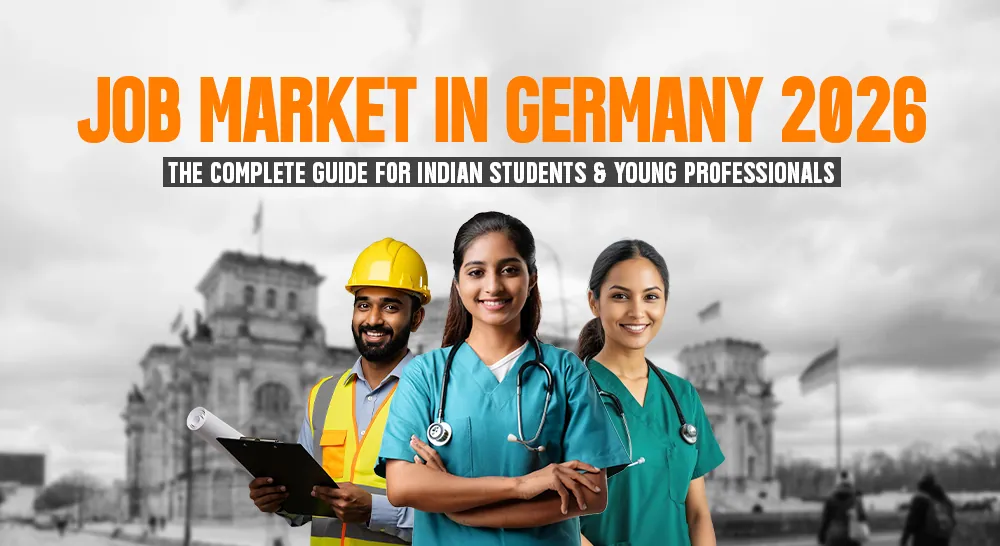
Job Market in Germany 2026: The Complete Guide for Indian Students & Young Professionals





Germany is considered an opportunity-rich career destination by many. The reason is that the German job market offers strong industry demand, structured immigration pathways, and long-term growth prospects. Employers across the country are actively hiring international talent to fill critical gaps as a large share of Germany’s workforce approaches retirement.
This has led to an expanded shortage-occupation list in Germany and to increased job opportunities for Indian graduates across the IT, engineering, healthcare, and sustainability sectors. With the right qualifications, language skills, and planning, many students successfully get jobs in Germany from India and build secure global careers. At Zeiq Consultants, we guide aspiring candidates who want clarity about studying, working, and settling in Germany.
Overview of the Job Market in Germany
By 2026, Germany’s job market will reflect an economic transition supported by strong industrial foundations and emerging technologies. While manufacturing and exports continue to drive the economy, investments in digital transformation and renewable energy are creating new job opportunities and reshaping hiring trends across various sectors.
What Defines the German Job Market Today?
The German job market is now defined by several factors, such as:
- Strong manufacturing and export-oriented economy
- Rapid growth in technology and digital industries
- Expansion of renewable energy and sustainability projects
- Labour shortages due to an ageing population
- Structured immigration pathways for skilled professionals
The country has an updated list of skilled workers that highlights demand in IT, engineering, healthcare, construction, and the skilled trades. Indian students pursuing higher education in Germany should choose fields linked to jobs in demand, as this significantly improves post-study employment prospects.
Top In-Demand Industries in 2026
Germany’s evolving economy is creating strong demand across both high-tech and traditional sectors. For Indian students and young professionals, choosing the right industry is key to accessing the most in-demand jobs in Germany and building long-term career stability.
1. IT & Digital Technology
Germany’s digital economy continues to expand rapidly. Cities like Berlin, Munich, and Frankfurt are attracting startups, global technology firms, and research-driven companies investing in artificial intelligence, cloud computing, cybersecurity, and automation. This has made Germany one of the leading destinations for IT jobs in Europe, with a continuous demand for skilled developers and engineers.
Top in-demand careers in Germany (Tech Sector):
- Software Developers
- Data Scientists
- AI & Machine Learning Engineers
- Cybersecurity Experts
- Cloud & DevOps Engineers
IT and digital technology jobs are among the highest-paying jobs in Germany, with average salaries ranging from €55,000 to €95,000 annually. While English-speaking roles are common, especially in Berlin. German language skills significantly improve long-term career progression.
2. Engineering & Manufacturing
Germany is known for its strong engineering tradition and world-class automotive industry. Engineering continues to offer stable and growing career opportunities and remains one of the top careers in Germany for skilled professionals, especially in automotive innovation, robotics, and industrial automation. Because of this, it remains one of the best jobs in Germany for long-term career security.
High demand roles include:
- Mechanical Engineers
- Electrical Engineers
- Automotive Engineers
- Mechatronics Specialists
- Robotics Engineers
Professionals with experience in automation, electric vehicles, and industrial digitalisation are particularly valued.
3. Healthcare & Nursing
An ageing population has created urgent hiring needs across Germany’s healthcare system. This sector consistently appears on the skilled workers list and remains one of the most secure employment pathways.
High demand jobs in Germany (Healthcare):
- Registered Nurses
- Elderly Care Specialists
- Medical Technicians
- Specialist Doctors
Specialist doctors can earn between €80,000 and €150,000 annually, making healthcare one of the leading high-salary jobs in the medical field. However, C1-level German proficiency and formal license recognition are mandatory.
4. Green Energy & Sustainability
Germany is shifting strongly toward renewable energy and climate-friendly technologies. Investments in wind power, solar energy, hydrogen, and energy storage are growing quickly, creating new opportunities in the energy sector.
Roles in demand:
- Renewable Energy Engineers
- Energy Systems Analysts
- Environmental Consultants
- Sustainability Managers
These roles are widely recognised as priority careers in Germany’s labour shortage sectors and are also considered among the top ten careers of the future in Europe.
5. Skilled Trades & Agriculture
Beyond the corporate sectors, there are labour shortages in skilled trades and agricultural jobs in Germany that offer structured vocational pathways. High-demand roles include electricians, plumbers, welders, construction technicians, and agricultural machinery operators. These professions offer strong vocational career pathways.
Most Demanded Jobs in Germany & Salaries
When evaluating the job market in Germany, salary expectations play a major role in career planning. While earnings vary by experience, qualifications, and city, certain professions consistently appear on Germany’s shortage occupation list and are considered among the most in-demand jobs. These roles consistently appear on the German labour shortage careers list and are among the most secure employment paths for skilled professionals.
The following table highlights average salary ranges for major shortage sectors in Germany.
| Industry | Roles | Average Salary (€) |
|---|---|---|
| IT & Digital Technology | Software Developer, Data Scientist, AI/ML Engineer, Cybersecurity Expert | 55,000 – 95,000 |
| Engineering & Manufacturing | Mechanical Engineer, Electrical Engineer, Automotive Engineer, Robotics Specialist | 50,000 – 78,000 |
| Healthcare | Registered Nurse, Specialist Doctor, Medical Technician | 35,000 – 150,000 |
| Green Energy & Sustainability | Renewable Energy Engineer, Energy Systems Analyst | 50,000 – 80,000 |
| Architecture & Construction | Architect, Construction Planner | 45,000 – 70,000 |
Technology and engineering roles dominate high-demand jobs in Germany, while healthcare positions remain critical due to demographic changes. Many of these careers are recognised as among the best jobs in Germany and include several high-paying roles, particularly in tech and medicine. For Indian students and young professionals, targeting these sectors increases the likelihood of stable employment and long-term career growth.
Regional Hotspots for Jobs
Germany’s major cities specialize in different industries, creating strong regional job clusters for skilled professionals.
- Berlin is popular for its vibrant startup ecosystem and rapidly growing technology sector. The city attracts software developers, data analysts, and digital marketing professionals working in startups and global tech companies.
- Munich is a leading center for engineering and automotive innovation. Major companies in automotive manufacturing, robotics, and advanced engineering make it a top destination for engineers and technical specialists.
- Frankfurt serves as Germany’s financial capital. International banks, investment firms, and financial institutions create a strong demand for professionals in finance, fintech, and business management.
- Hamburg is a major hub for logistics and global trade. Its large port and shipping industry support careers in supply chain management, transportation, and international commerce.
Skills Required to Work in Germany
Building a career in Germany’s job market requires technical knowledge, language skills, and professional adaptability. For international graduates exploring job opportunities in Germany for Indian professionals, developing these skills significantly improves employability.
1. German Language Proficiency
German language skills play a major role in employability. Many companies prefer candidates with B1 to C1 level German, particularly in fields such as healthcare, engineering, and customer-facing roles. While some international companies operate in English, knowing German improves communication with colleagues and clients. Language proficiency also helps professionals integrate into the workplace and daily life.
Understanding the required language level can help students prepare better before entering the German job market.
Typical language expectations by sector include:
- IT & Digital Technology: Many roles are English-friendly, especially in international companies and startups. However, B1 or B2 German helps with long-term career growth and workplace communication.
- Engineering & Manufacturing: Most employers prefer B1 or B2 German, particularly for roles involving teamwork, factory operations, and technical documentation.
- Healthcare & Nursing: This sector usually requires C1-level German because professionals must communicate clearly with patients, doctors, and medical staff.
- Business, Finance & Administration: Companies often expect B2 or higher proficiency in German for client interactions and professional communication.
For students planning to work in Germany after graduation, starting language preparation early can significantly improve access to jobs in demand in Germany and increase long-term career opportunities.
2. Technical Certifications
Professional certifications strengthen a candidate’s profile and demonstrate practical industry knowledge. Employers in Germany often prioritize applicants who have recognized credentials or specialized training.
Examples include:
- Cloud computing or cybersecurity certifications for IT professionals
- Industry software tools and automation training for engineers
- Medical licensing or recognition for healthcare professionals
These qualifications increase access to the most demanded jobs in Germany, particularly in sectors facing labour shortages.
3. EU Blue Card Eligibility
The EU Blue Card is one of the main pathways for skilled international professionals who want to work in Germany. Candidates with recognized degrees and a qualifying salary can apply for this permit. It allows non-EU professionals to live and work in the country and can lead to long-term residency.
Many professionals working in high-demand jobs in Germany, especially in IT, engineering, and healthcare, enter the country through the Blue Card system.
4. Adaptability and Cultural Awareness
Professional success in Germany also depends on understanding workplace culture. German organizations value punctuality, clear communication, and structured processes. Employers appreciate candidates who demonstrate teamwork, responsibility, and cultural awareness. Adaptability helps international professionals adjust more smoothly to a new work environment.
Challenges in the Current Job Market
Although Germany offers strong career opportunities, job seekers may encounter certain challenges when entering the labour market.
Sector-Specific Slowdowns
Some industries are experiencing structural changes. The automotive sector, for example, is shifting toward electric vehicles and digital technologies. These transitions can temporarily affect hiring trends as companies adjust their workforce needs. At the same time, they also create new roles in battery technology, mobility software, and sustainable transportation.
Competition in Technology Roles
Technology continues to generate many high-demand jobs in Germany, but competition remains strong. Skilled professionals from different countries apply for roles in software development, cybersecurity, and data science. Candidates with specialized skills, industry experience, and language proficiency usually have stronger chances of securing these positions.
Visa and Language Barriers
International professionals may also face challenges related to visa procedures and language requirements. Some employers prefer candidates who already hold work authorization or speak German at a professional level. Preparing in advance with language certifications and understanding immigration pathways can improve job prospects.
Regional Variations
Job availability can vary by region and industry. Technology jobs are more common in Berlin and Munich, finance roles are concentrated in Frankfurt, and logistics careers are prominent in Hamburg. Understanding these regional patterns helps job seekers plan a more focused job search.
Conclusion
Germany remains one of Europe’s most attractive destinations for skilled professionals. A strong economy, advanced industries, and a growing demand for talent create excellent career prospects across multiple sectors.
For Indian students and young professionals, the job market in Germany offers opportunities in IT, engineering, healthcare, and renewable energy. These industries represent some of the top careers in Germany and major labour shortage sectors, offering long-term career growth for skilled professionals.
Zeiq Consultants supports students with university admissions, visa guidance, and German language training to help them build successful careers in Germany. With the right preparation, language training, and career planning, students can confidently pursue skilled worker opportunities in Germany and build successful international careers.
Frequently Asked Questions
1. Can Indian students get jobs in Germany after graduation?
Yes. International students who graduate from German universities can stay in the country for up to 18 months to look for employment. Once they secure a job related to their degree, they can apply for a work permit or EU Blue Card and start their professional career in Germany.
2. Which jobs are most in demand in Germany?
Some of the most in-demand jobs in Germany include software developers, data scientists, mechanical engineers, nurses, renewable energy specialists, and skilled trade professionals. These roles appear frequently on Germany’s shortage occupation list due to the country’s ageing workforce and strong industrial demand.
3. Do I need German language skills to work in Germany?
German language skills greatly improve job opportunities. Many sectors require B1 or B2 level German, while healthcare jobs often require C1 proficiency. Some technology roles at international companies are open to English-speaking professionals, but learning German supports long-term career growth.
4. Which city in Germany is best for job opportunities?
Germany has several cities with strong employment opportunities across different industries. Berlin is known for startups and technology companies, Munich is a major center for engineering and automotive industries, Frankfurt offers many opportunities in finance and banking, and Hamburg is a leading hub for logistics and international trade. Choosing the right city can improve job prospects depending on the industry and career field.
5. What salary is required to qualify for the EU Blue Card in Germany?
The EU Blue Card requires a minimum annual salary set by the German government. For many professions, the threshold is around €45,000-€50,000 per year, with lower limits for shortage occupations such as IT, engineering, and healthcare.
