

Minimum Wage in Germany for International Students 2025





If you’re from Kerala, chances are you already know at least one cousin, neighbour, or friend who is planning to study in Germany, or maybe you’re that person. For many students from Kerala, Germany is more than just a study destination; it’s a long-term dream. It is because of its affordable education, strong job market, and the chance to earn through part-time work.
And when planning this journey, one question naturally comes up: What is the minimum wage in Germany for international students? Germany follows a reliable wage system that protects all workers, including students. Knowing this helps Kerala students plan their expected income, calculate living expenses, and choose suitable part-time job options before arriving in Germany.
This guide covers wage rules, working hours, average earnings, penalties, and common student jobs for those beginning their study journey.
What Is the Minimum Wage in Germany in 2025?
The official minimum wage in Germany for 2025 is €12.82 per hour. This wage applies to almost all workers in the country, including students working part-time.
Who is eligible for the minimum wage?
The following groups fall under the minimum wage rule:
- All full-time workers
- Part-time workers
- International students
- Temporary workers
- Mini-job workers (unless exempted under special rules)
Monthly and yearly salary calculation (full-time worker)
A full-time employee works approximately 40 hours per week.
| Period | Calculation | Income |
|---|---|---|
| Weekly | €12.82 × 40 | €512.80 |
| Monthly (approx.) | €512.80 × 4 | €2,051 |
| Yearly | €2,051 × 12 | €24,612 |
This information gives students a realistic understanding of Germany’s salary standards and helps compare with Kerala’s job market.
Why the Minimum Wage Matters for International Students in Germany?
The minimum wage matters for international students in Germany as it is designed to:
- Ensure fair pay for every worker
- Protect people from exploitation
- Provide financial stability
- Maintain equal standards regardless of background
Introduced in 2015 at €8.50 per hour, Germany’s minimum wage has increased steadily in line with inflation, living costs, and labour market conditions. The 2025 update ensures that even student workers earn enough to support basic expenses.
Working Hours Allowed for International Students in Germany
Germany has well-defined regulations on the number of hours international students can work, ensuring studies remain the main priority while still allowing part-time employment.
EU/EEA Students
Students from EU and EEA countries follow the same rules as German students. They can work 20 hours per week during the semester and full-time (up to 40 hours per week) during semester breaks without restrictions.
Non-EU Students (including students from Kerala/India)
Non-EU students have specific limits on the number of hours they can work while studying. These rules apply across most part-time job types.
- Allowed to work 120 full days per year or 240 half days per year
- Limits include off-campus jobs, on-campus roles, and mini-jobs
- Students may work additional hours during semester breaks, but yearly limits remain the same.
- Night shifts and weekend shifts also count toward annual limits.
- Students cannot work as freelancers or be self-employed.
- Students must receive at least €12.82 per hour for eligible part-time jobs.
- Only specific roles, such as mandatory internships or unpaid voluntary internships lasting less than 3 months, may be exempt from minimum wage rules.
Exceeding allowed working hours can result in higher taxation, compulsory public health insurance, visa-rule violations, and complications with future visa extensions or residency applications.
How Much Can a Student Earn in Germany? (2025 Earnings Breakdown)
To help Kerala students plan their expenses, here is a realistic breakdown of potential monthly earnings based on Germany’s 2025 minimum wage of €12.82 per hour.
| Weekly Working Hours | Monthly Earnings (Approx.) |
|---|---|
| 10 hrs/week | €512/month |
| 15 hrs/week | €770/month |
| 20 hrs/week | €1,025/month |
Understanding Gross vs Net Income
Gross income is the amount earned before any deductions, while net income is the final amount received. Students generally avoid taxes if they stay below the mini-job limit of €538/month. But earning above this may involve:
- Income tax
- Pension contribution (usually 9.3% for student workers)
- Health or public insurance deductions depending on income level
Students under 25 can sometimes remain on their parents’ insurance if income stays within limits. Even after deductions, most students earn enough to cover basic living costs such as rent, groceries, transport, and health insurance.
Typical Student Jobs and Wages in Germany
Germany offers a variety of part-time roles that fit student schedules, especially for international students balancing academics and living expenses.
| Job Type | Average Pay Per Hour |
|---|---|
| Cashier/Barista (Café roles) | €12–€15 |
| Supermarket assistant | €12–€14 |
| Delivery services (food/grocery) | €12–€17 |
| Warehouse / Logistics helper | €13–€16 |
| Call centre / Customer support | €12–€16 |
| Event or festive work (seasonal jobs) | €12–€18 |
| University assistant (HiWi roles) | €12–€18 |
| Teaching English / Subject tutoring | €15–€25 |
| Babysitting / Pet care | €12–€20 |
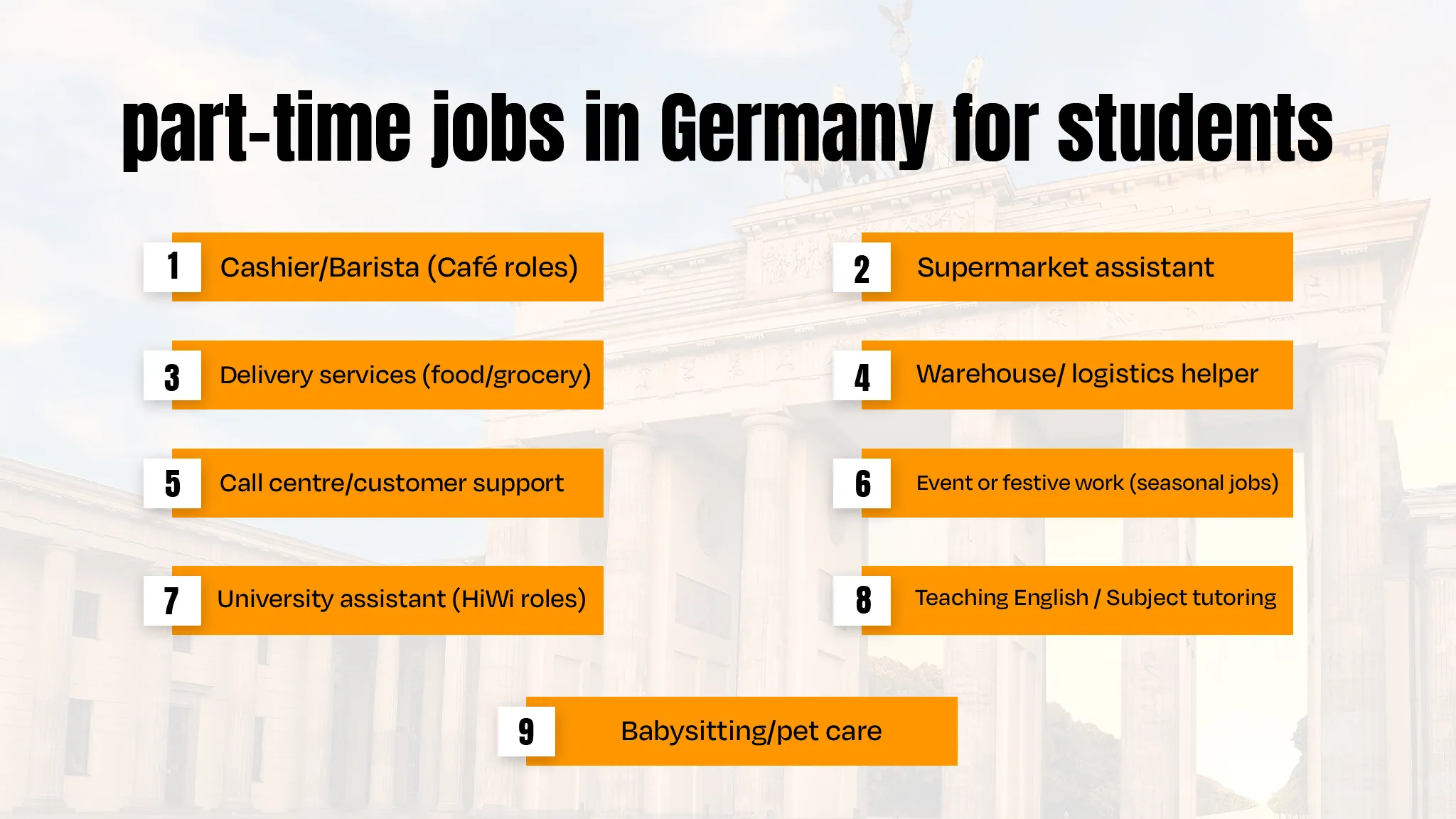
Most roles pay at least the minimum wage, while skill-based jobs such as tutoring or university assistant positions often pay higher. Students can choose their jobs based on skills and schedule.
Penalties for Violating Minimum Wage Rules in Germany
Germany enforces wage regulations strictly under the Minimum Wage Act (MiLoG). Employers must pay at least €12.82 per hour, maintain time records, and meet documentation requirements. The Customs Authority (Zoll) regularly audits companies and imposes heavy penalties for violations. Below is the list of common violations and penalties:
| Violation by Employer | Penalty |
|---|---|
| Paying below €12.82/hr | Up to €500,000 fine |
| Not recording working hours (mandatory for student jobs & mini-jobs) | Up to €30,000 fine |
| Illegal deductions from student wages | Full reimbursement + legal penalties |
| Forcing unpaid overtime | Labour court penalty + compensation claims |
| Hiring students beyond legal work-hour limits | Employer fined + student flagged for visa non-compliance |
| Not providing a proper employment contract | Administrative fines + compliance action |
| Not paying social contributions when required | Back payments + penalties + interest |
| Paying cash without reporting (black work) | Severe fines, tax penalties, and criminal charges |
Additional Compliance Points Students Should Know
International students must also be aware of basic employment compliance to avoid issues:
- Work-hour documentation is compulsory for mini-jobs and most part-time roles.
- Never agree to cash-in-hand (Schwarzarbeit) jobs; they are illegal and harm your visa status.
- Employers must provide a written Arbeitsvertrag (contract) with hours, wages, and duties.
- Students should always receive a payslip (Lohnabrechnung) showing taxes and deductions.
These ensure transparency and protect students from underpayment or exploitation.
Conclusion
International students in Germany earn a minimum of €12.82 per hour, which helps them comfortably cover essential expenses such as rent, food, transport, and insurance. With clear work-hour limits and strong labour protection, students can balance studies and part-time jobs safely. Understanding wage rules, deductions, and common job options also prevents underpayment and avoids visa-related issues.
If you’re a student from Kerala planning your German study journey, Zeiq Consultants can guide you through admissions, budgeting, part-time job planning, and essential documentation. Our expert support can help you begin your education in Germany with confidence. Book your consultation today!
FAQs
1. Do I need to know German to get a part-time job in Germany?
Not always. Many warehouse, delivery, cleaning, and kitchen helper jobs do not require German. However, roles like cashier, retail, café assistant, and customer support generally prefer at least an A1-A2 level of German. Learning basic German significantly increases your chances of getting a job.
2. Will I be taxed heavily if I earn more than the mini-job limit (€538/month)?
You won’t be “heavily taxed”, but you may pay small amounts for income tax and a 9.3% pension contribution. Depending on your contract, you may get pension contributions refunded when leaving Germany. Taxes remain manageable for students.
3. Can part-time earnings affect my blocked account requirement?
No. The blocked account requirement is mandatory and separate. Even if you earn well from part-time jobs, you must still show the full blocked amount during visa processing.
4. What happens if my employer pays me in cash without a contract?
Avoid it. Cash-in-hand jobs are illegal (Schwarzarbeit) and can result in visa issues, fines for the employer, and loss of future permits. Always work with a proper contract and monthly payslips.
5. Do part-time jobs affect my academic performance?
If you work responsibly for 10-15 hours per week, it usually doesn’t affect your studies. But 20 hours per week can become challenging during exam periods. Time management is essential.
